Fund Your Utopia Without Me.™

20 August 2013

Pic of the Day: Kristallnacht - Then and Now


http://tinyurl.com/kryz2lf

Egyptian Kristallnacht


By Andrew Doran

The millions of Egyptians, Muslim and Christian, who took to the street in peaceful protest over a month ago understood well the consequences of crossing the Muslim Brotherhood. “So much violence, so many innocent people killed,” says Mina Thabet, an Egyptian human-rights activist who lives in Cairo. “The [Mohamed] Morsi supporters are armed and killing people in the streets. They are targeting Copts. But if the Muslim Brotherhood had remained in power, we would have the same violence and much more because he would use the institutions of the country, the army and the police, against us.”

The Muslim Brotherhood is using violence to terrorize Egypt, claiming the lives of hundreds of Egyptians, many of whom were Christian. In the violence that erupted on Wednesday and Thursday, 32 churches were destroyed and 19 severely damaged, according to the Maspero Youth Union, a Christian human-rights organization. Scores of Christian homes, businesses, and automobiles were destroyed — all of this in roughly 24 hours.

And yet, bizarrely, Western media have largely portrayed the Muslim Brotherhood as the victims of violence. Egypt’s moderates are not persuaded that the brutality of the Muslim Brotherhood’s partisan paramilitaries is a sign that the Morsi regime should have remained in power. “The violence would come one way or the other,” Thabet observes. “No, I have no regrets.” 

Many Egyptians believe that Morsi was on a path to radicalize Egypt’s government, judiciary, and military, and that if the Muslim Brotherhood had not been stopped, it might have been decades before the Islamist regime was dislodged. This has forced secular-leaning Egyptians to accept the lesser of two evils, martial law. 

“Even the military rule is better than Muslim Brotherhood rule because the Muslim Brotherhood is against humanity itself,” says Thabet. That the most secular, liberal-minded Egyptians prefer a military dictatorship to the Muslim Brotherhood is telling, though it must be added that they hope it is temporary.

The military has been slow to respond to civilians’ desperate pleas for help. Even before this week’s violence, the Egyptian government was unable — or, perhaps more accurate, unwilling — to take basic steps to protect Egypt’s Christians or their churches, which are a particular target of the Muslim Brotherhood’s attacks. Still, Copts have no question which is the lesser of two evils.

They also have a strong sense of betrayal by the West and America. Having struck a blow for freedom at considerable personal cost and in the face of significant odds, the millions of Egyptians who took part in the June 30 Revolution are confounded by the Western reaction. “I don’t know why the American media did this. It is terrible,” said Thabet. One liberal American missionary who has lived in Egypt for several decades was irate in an e-mail message. “Christians here are getting hit hard. . . . I am thoroughly [upset] at the hypocrisy of the EU and the U.S. What whores we have running the world. I can only say worse things about western news coverage in general.”

They are angry that the peaceful, nonviolent protests, which set in motion events that led to the removal of Morsi, have been largely condemned in the West, while the Muslim Brotherhood, perpetrators of heinous acts of violence, have been portrayed as victims. “The Muslim Brotherhood is armed,” says Thabet. “We are not armed.” The violence of recent days seems to confirm that the Muslim Brotherhood was bent on violence all along and was not an organization that, as Robert Kagan recently asserted, “renounced violence and terrorism years ago.” In the aftermath of this week’s atrocities, Mr. Kagan ought to be force-fed his words.

In 2011, Christians had been reluctant to see Hosni Mubarak removed. This prompted claims among the many 2011 revolutionaries that Christians were not invested in reform. In 2013, Christians stood with the rest of Egypt’s revolutionaries in a united front numbering upward of 20 to 30 million. “Copts had a big role in this revolution, in the street like everyone else,” says Thabet. “Not like last time, when they say we were not there. The Christians fasted with the Muslims during Ramadan. It was very good. It brought unity.”

The 2013 revolution had broader popular and institutional support, including from the military, the police, the judiciary, the Muslim clerics of Al Azhar Mosque, and the Coptic Orthodox Church. More to the point, the 2013 revolution was peaceful. The Muslim Brotherhood took to the streets in the revolution’s aftermath and inflicted violence, bloodshed, and terror on their countrymen. Christians have paid most heavily. Even before this week’s attacks, systematic violence against Egypt’s Christian community was escalating (a priest was murdered; a ten-year-old Coptic girl was shot and killed; a businessman was beheaded). Now scores of Christian homes, businesses, and churches have been destroyed.

The Muslim Brotherhood’s systematic and coordinated attacks against Christians in Egypt are reminiscent of Kristallnacht in Germany in 1938, when Nazi paramilitaries systematically vandalized Jewish homes, businesses, and synagogues and murdered scores of Jews in a disturbing foreshadowing of the fate of European Jews over the next few years. It is no accident that many Jews, including Barry Rubin and Jeffrey Goldberg, have been quick to raise the alarums over the persecution of Christians: They recognize the dangerous signs. “They have hatred in their hearts,” says Thabet of the Brotherhood, echoing observations commonly made of the National Socialists in 20th-century Germany.

When the Nazis sensed that the war was unwinnable, they put all of their organizational energies into the “final solution.” Though most Jews were defenseless non-combatants, the Nazis felt that they should not be left behind to stand over the grave of National Socialism. One senses that same hatred and desperation as the Muslim Brothers respond to the military’s crackdown by attacking defenseless Christians. We may be thankful that the Muslim Brothers lack the organizational skill of the Nazis, but it appears they lack none of their hate.

Europe’s Jews did not have the good fortune to see their oppressors removed shortly after their rise to power — though such opportunities did exist. Then, as now, only token condemnations were uttered by Western governments as the fascists consolidated power. Western governments were then, as now, profoundly wrong.

“You have fought to get democracy as you now have it,” says Thabet. “We are fighting for our own democracy. That is what you are seeing now.” If freedom and stability are restored to Egypt, it will be despite, not because of, the West. 

— Andrew Doran served on the executive secretariat of the U.S. National Commission for UNESCO at the U.S. Department of State. His views are his own.


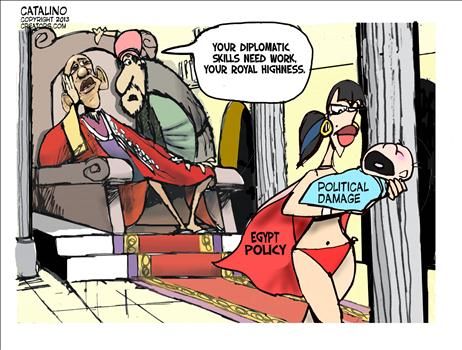
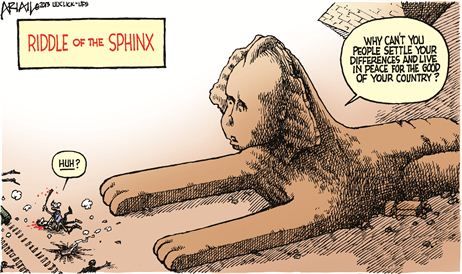
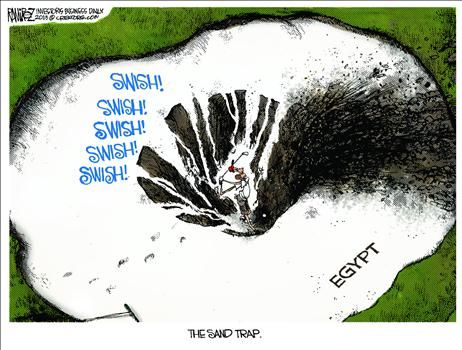
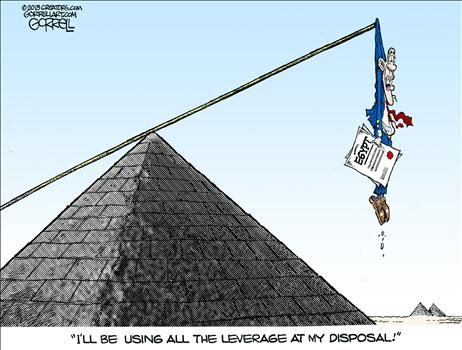
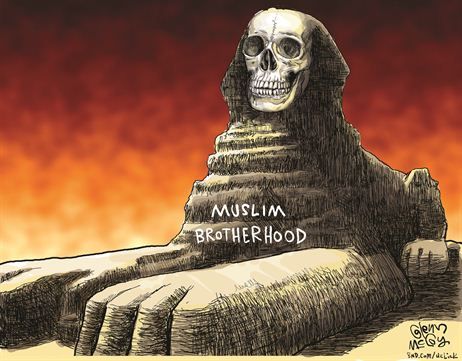
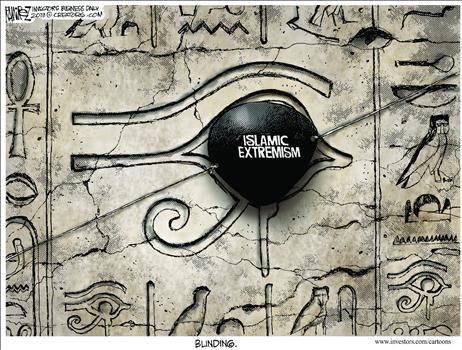
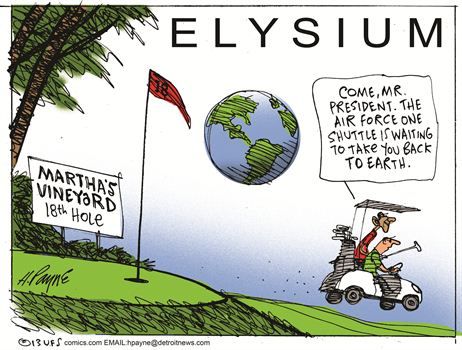
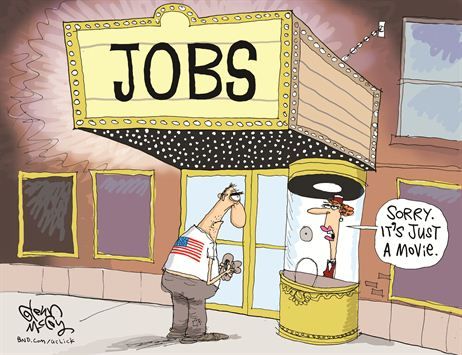
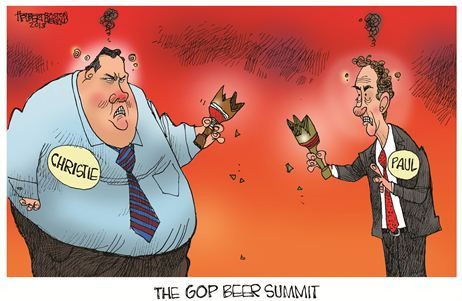
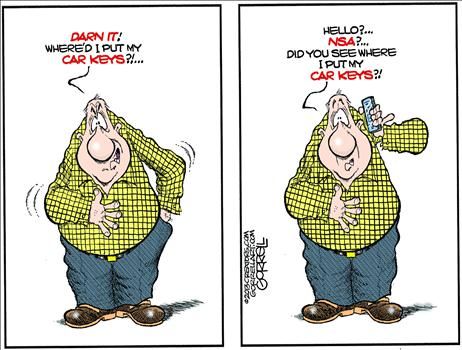
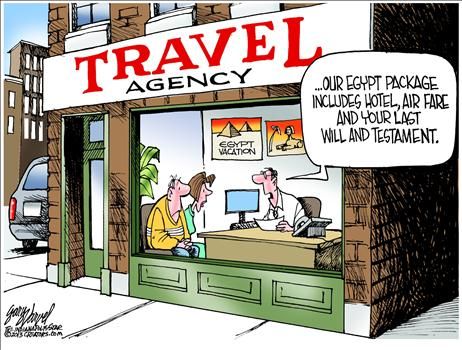
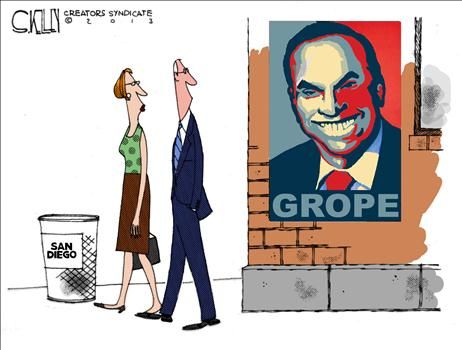
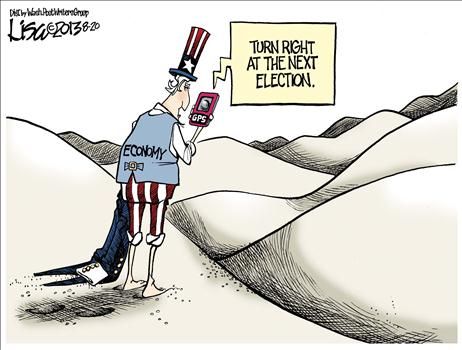
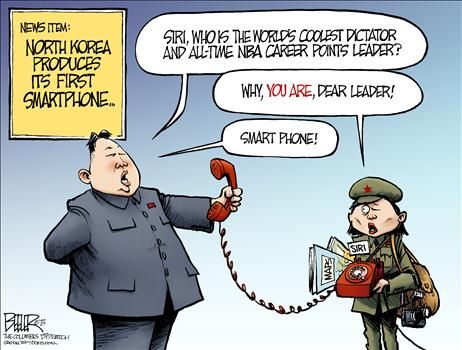
'Toons of the Day: White House Hieroglyphics


Political Cartoons by Michael Ramirez

Political Cartoons by Henry Payne

Political Cartoons by Glenn Foden

Political Cartoons by Glenn McCoy

Political Cartoons by Jerry Holbert

Political Cartoons by Bob Gorrell

Political Cartoons by Gary Varvel

Political Cartoons by Steve Kelley

Political Cartoons by Lisa Benson

Political Cartoons by Nate Beeler


http://tinyurl.com/lkqv34v

19 August 2013

The White House Wants Your Cellphones...Without A Warrant


obamus 2


All your meta data, cellphones and much more belong to him.

...And, he don't need no steekin' warrant!


By Timothy B. Lee


If the police arrest you, do they need a warrant to rifle through your cellphone? Courts have been split on the question. Last week the Obama administration asked the Supreme Court to resolve the issue and rule that the Fourth Amendment allows warrantless cellphone searches.

In 2007, the police arrested a Massachusetts man who appeared to be selling crack cocaine from his car. The cops seized his cellphone and noticed that it was receiving calls from “My House.” They opened the phone to determine the number for “My House.” That led them to the man’s home, where the police found drugs, cash and guns.

The defendant was convicted, but on appeal he argued that accessing the information on his cellphone without a warrant violated his Fourth Amendment rights. Earlier this year, the First Circuit Court of Appeals accepted the man’s argument, ruling that the police should have gotten a warrant before accessing any information on the man’s phone.

The Obama Administration disagrees. In a petition filed earlier this month asking the Supreme Court to hear the case, the government argues that the First Circuit’s ruling conflicts with the rulings of several other appeals courts, as well as with earlier Supreme Court cases. Those earlier cases have given the police broad discretion to search possessions on the person of an arrested suspect, including notebooks, calendars and pagers. The government contends that a cellphone is no different than any other object a suspect might be carrying.

But as the storage capacity of cellphones rises, that position could become harder to defend. Our smart phones increasingly contain everything about our digital lives: our e-mails, text messages, photographs, browser histories and more. It would be troubling if the police had the power to get all that information with no warrant merely by arresting a suspect.

On the other hand, the Massachusetts case involves a primitive flip-phone, which could make this a bad test case. The specific phone involved in this 2007 incident likely didn’t have the wealth of information we store on more modern cellphones. It’s arguably more analogous to the address books and pagers the courts have already said the police can search. So, as Orin Kerr points out, if the Supreme Court ruled on the case, it would be making a decision based on “facts that are atypical now and are getting more outdated every passing month.”


http://tinyurl.com/kqemqp3


Chicago Tribune Editorial Board: Let's Delay And Rewrite This Ill-Conceived Law


Editorial: Congress gets its Obamacare break

More reasons to delay and rewrite this ill-conceived law


By The Editorial Board of the Chicago Tribune

Democrats strong-armed Obamacare into law three years ago. Now they're busy flouting it.

The mandate that employers provide insurance next year or pay a penalty, as the law requires? Delayed for at least a year.

The law's dictate that people applying for federal subsidies to buy insurance provide proof that they're eligible for the government aid? Scaled back. 

Sharp limits on Americans' out-of-pocket costs for health care? Suspended for a year.

Providing members of Congress and more than 10,000 staff members with federal health care subsidies that the law does not allow? Done, via a deal brokered by President Barack Obama. 

And on and on.

The Affordable Care Act, aka Obamacare, is a hugely complex law that sets up online health insurance marketplaces, requires people to have coverage or pay penalties, and doles out subsidies and incentives to nearly everyone in health care. Doctors, hospitals and insurers have spent large sums to gear up for its requirements. Employers are mulling: Hire? Fire? Cut workers' hours? 

Millions of Americans, that is, stand to gain or lose from how this law is enforced — with the Obama administration bending that enforcement in ways that test, and arguably exceed, the boundaries of lawful conduct.

Every time the White House undercuts one provision of Obamacare, there is a massive ripple effect on other provisions. It's generally a zero-sum game: When someone gains, someone else loses. Example: When employers are relieved of their mandate to provide insurance, taxpayers risk having to subsidize more of those companies' employees. 

The administration asserts that it can make these changes under the president's broad executive authority. Yet critics make a compelling argument that the president is stretching the limits. Former federal appellate Judge Michael McConnell, director of the Constitutional Law Center at Stanford Law School, writes in The Wall Street Journal about a different sort of mandate: the mandate in Article II of the Constitution that the president "'shall take Care that the Laws be faithfully executed.' This is a duty, not a discretionary power. ... As the Supreme Court wrote long ago (Kendall v. United States, 1838), allowing the president to refuse to enforce statutes 'would be clothing the president with a power to control the legislation of Congress, and paralyze the administration of justice.'"

Like most issues of presidential authority, this isn't cut and dried. Presidents do have broad discretion on how laws are enforced. But they're on shaky ground when they decide whether to enforce a law. It's not hard to understand why: Imagine the outcry if President Mitt Romney refused to enforce, say, Obamacare. 

Granted, any president may decline to enforce statutes he believes are unconstitutional. But Obama is making no such claim here. Basically, he is admitting that parts of law are impossible to enforce on the deadlines imposed by Congress — deadlines he signed into law. He's also admitting he doesn't want to have Congress make these changes, for fear that if lawmakers get their mitts on this unpopular program, they would at least debate far more extensive changes than he'd like.

Congressional Democrats, and some Republicans, may agree with the numerous delays, changes and special favors. But the president invites chaos when he picks which parts of Obamacare to enforce, and which, in retrospect, he has decided are unworkable or unwise. 

In a recent news conference, Obama acknowledged that congressional modification of the law is preferable to these White House fiats: "In a normal political environment, it would have been easier for me to simply call up (House Speaker John Boehner) and say, 'You know what? This is a tweak that doesn't go to the essence of the law. ... Let's make a technical change of the law.' That would be the normal thing that I would prefer to do, but we're not in a normal atmosphere around here when it comes to, quote-unquote, 'Obamacare.'''

Tweaks? Obama isn't making tweaks. He's trying to circumvent major flaws that began flaring when the law was enacted. Hence the many carve-outs, delays and special deals that have been piling up since he added his signature to Obamacare on March 23, 2010. 

The president crusaded for this law and has embraced its nickname. But he did not write the law. Congress did. Major changes are necessary — he has stipulated by his actions that this law as constituted cannot work — and Congress should legislate them for his review.

Bottom line: Let's delay and rewrite this ill-conceived law. Congress need not start from scratch. Lawmakers can build on what all of us have learned from three years of painful trial and error. Three years of attempting, but failing, to make this clumsy monstrosity work for the American people.


http://tinyurl.com/ml9dz6f


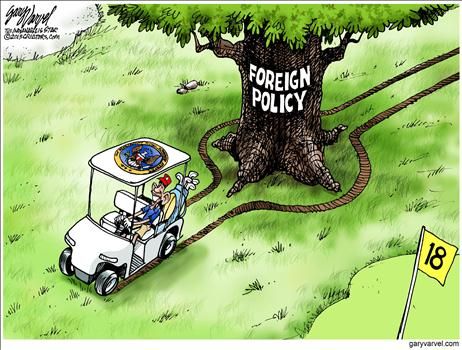
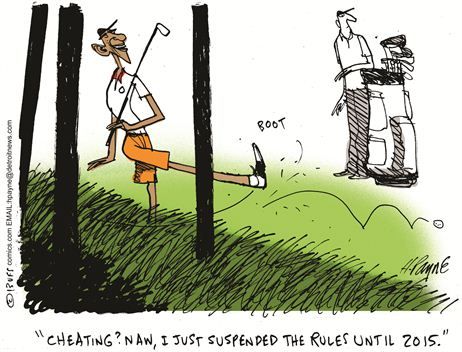
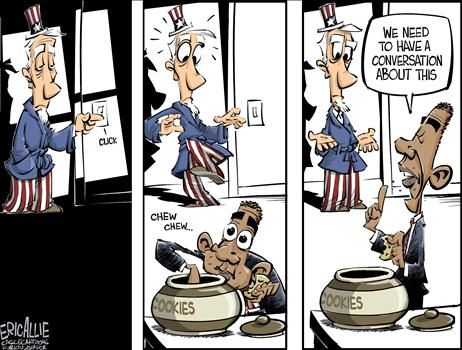
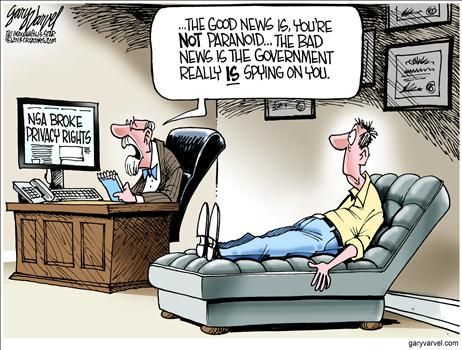
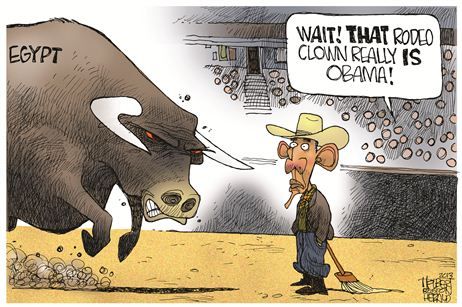
'Toons of the Day: Impudently Dictatorial At Home; Impotently Clueless Abroad


Political Cartoons by Michael Ramirez

Political Cartoons by Gary Varvel

Political Cartoons by Henry Payne


Political Cartoons by Eric Allie


Political Cartoons by Gary Varvel


Political Cartoons by Jerry Holbert

Political Cartoons by Michael Ramirez


Political Cartoons by Bob Gorrell


https://blogger.googleusercontent.com/img/b/R29vZ2xl/AVvXsEg2Yl3HW00XzbphR8ieanMA9MF3uCbkf6ykO1T-dS7KR90gFEuh93qUhNWeV5O0A_mnFKS3_3OuaT8jfEkMRsGo_gURaFVeJV_S6ku6t6528WYKQzzwRzjMl2htnqAf03hNjLKMJORYxfM/s400/Christian-Persecution.jpg

http://www.drybonesproject.com/blog/D11116_1.gif

http://counterjihadnews.files.wordpress.com/2012/05/christian-pers.jpg?w=584

Political Cartoons by Glenn McCoy

 
http://crossculturalrhetoric.files.wordpress.com/2010/10/cartoon-egypt1.jpg


A personal note on Egypt:

Obama, McCain, and Graham are all calling for 'quick elections.' How'd that work out for Egyptians and us the last time? The MoFoBros are the only political organisation that is, well, organised. 'Quick elections' may very well return the MoFoBros to power.

The Three Idiots are under the impression that elections = democracy. They don't. Hitler was elected.

In order for there to be a democracy, there must be political freedom, freedom of speech, religious freedom, and a free press, among other inalienable rights. The MoFoBros didn't allow the Coptic Christians to participate in the 'democracy.' Then, Pharaoh Morsi suspended the constitution and took dictatorial powers for himself.

The sooner that Obama, McCain, ad Graham are GONE, the better the world and the US will be. 


http://tinyurl.com/kurvh83

Studies: Christians Are At Present The Most Persecuted Religious Group Worldwide


http://johnnycirucci.com/wp/wp-content/uploads/2012/08/Egyptian-Christian-crucified.jpg

Egyptian crucifixion of Christian by Islamists


By Peter Berger

Both Roman Catholic and Evangelical Protestant media have for years been drawing public attention to the persecution of Christians in many countries. Secular media have been less attentive; some have ascribed this to an anti-Christian bias; I rather doubt this—more likely it comes from the fact that many otherwise well-informed journalists are less informed on religious matters. Outside the denominational media, two individuals have done more than anyone else to cover this phenomenon: Paul Marshall (of the Hudson Institute) and Brian Grim (of the Pew Research Center). All the data I have seen indicate that Christians are at present the most persecuted religious group world-wide. Grim recently testified about this before the European Parliament: He stated that Christians are directly harassed by governments in 102 countries and by “social actors” (read lynch mobs) in 101 countries. There has also been decent coverage by the United States Commission on International Religious Freedom, the independent agency set up with government funding, in addition to the bureau within the State Department that reports on religious freedom worldwide every year.

In its 2013 report the Commission has a list of 8 countries (which include China) designated “countries of particular concern” (CPCs, who are reported as such to the President and the Congress, for possible US government actions). The 2013 list includes 3 Muslim-majority countries: Iran, Saudi Arabia and Sudan. There is an additional list of countries heading toward CPC status, including 4 Muslim-majority or heavily Muslim countries: Egypt, Iraq, Nigeria (its northen part), and Pakistan. It is fair to conclude that Christians have most to be afraid of from actions by Muslims, be it by courts, government policies, or by mobs of enraged Muslims encouraged by police inaction.

Rather than commenting on the Commission report country by country, I will look at a one day of reporting, on July 31, 2013, in Law and Religion Headlines, the online publication out of Emory University that I have found very useful as a reliable source of information on these issues. That date’s issue includes the following stories about persecution of Christians by Muslims in different countries.

One story comes from Pakistan (whose population is 96% Muslim, 2% Christian, cited by the Commission for “systematic, egregious intolerance toward minority faith groups”, which, by the way, includes attacks by Sunnis on Shia Muslims). An Adventist Christian was sentenced to life imprisonment for “blasphemy” against the Prophet Muhammad. In the perverse legal system of Pakistan, this sentence could actually be construed as lenient—the law provides a sentence of life imprisonment or death (given the condition of Pakistani prisons, there may not be much difference between these two sentences). The case in this story is not an isolated event. Prosecution for “blasphemy” is constant threat against Christians in Pakistan (as it is in other Muslim-majority countries). Just what is defined as “blasphemy” is very vague. It might, for example, include a simple statement by a Christian that, according to his faith, the Quran (which Muslims believe is “the seal of prophecy”) does not supersede the New Testament. The issue is not limited to Pakistan. It should be noted that Muslim states and organizations have lobbied for the introduction of blasphemy laws in countries that do not have them now, including even Western democracies.

Another story comes from Saudi Arabia, where the editor of social media propagating liberal values was sentenced to 7 years in prison plus 600 lashes (severe whipping is a common penalty in Saudi law). Oddly, he was also convicted of “disobeying his father” (a crime in Saudi Arabia). Apparently the editor is not a Christian. But the liberal values he advocates of course go against the fierce establishment of Wahhabi Islam in the Kingdom, enforced by the feared “religious police” (mandated to “promote the good and suppress evil”). Put simply, religious freedom in Saudi Arabia is nil. No Christian worship is permitted, no Christian clergy are admitted, neither is any Christian literature. Foreign Christians are allowed to huddle together in embassies or private homes.

Northern Nigeria has for some time been a particularly dangerous territory for Christians. The country is about 50% Christian (mainly in the south) and 50% Muslim in the north, where a slow-burning civil war between the two religions has been going on. The aggression has come from the Muslim side, though Christians (with some help from the central government) have been organizing to defend themselves. Boko Haram is a radical Muslim organization (“boko” is a term designating any Western influence, including through Christianity; “haram” is an Islamic term for “forbidden”). Activists linked to Boko Haram have been staging ongoing murderous attacks against Christian churches, homes and individuals; an estimated 3,600 lives have been lost to this carnage since 2009.

Let me add some other Muslim countries here. Saudi Arabia and Iran are already listed as CPCs in the Commission report. The state of freedom of religion in Iran is roughly the same as that in Saudi Arabia. Christians here too are threatened with prosecution for “blasphemy” and attempting to convert Muslims; Christian pastors are lingering in prison. Christians are not the only victims. Jews, while in theory protected as “People of the Book” have been prosecuted for allegedly being Israeli agents. The most savage persecution (including executions and multiple violations of civil rights) has been directed, since the beginnings of the Islamic Republic, against Baha’is (a nineteenth offspring of Shia Islam that still constitutes a sizable minority in the country, as well as having some 5 million adherents worldwide).

Egypt and Iraq are included in the Commission’s list of countries heading toward CPC status. Since the outbreak of the so-called Arab Spring (increasingly making that phrase doubtful), Muslim activists have been attacking Christians, especially the Coptic minority (which consists of about 10% of the Egyptian population).

Iraq affords a specially depressing picture: In addition to the increasingly bloody civil war between Sunni and Shia Muslims, Christians have been repeatedly attacked by Muslim terrorists. Iraq used to be the home of some of the most ancient Christian churches—Orthodox, some in communion with Rome; and so-called Oriental churches (those who dissented from the Christological decisions of the early ecumenical councils). Christians have emigrated in large numbers, and the Christian presence in Iraq is rapidly dwindling. This situation is getting worse with the departure of American troops, and the increasingly anti-Sunni policies of the Maliki government.

Let me also mention two other countries – Syria and Palestine. The Assad regime in Syria has (for its own reasons) been protective of Christians, who have tended to support it in the current civil war. With the growing presence of radical Islamists in the rebel forces, the situation of Christians in Syria is becoming ever more precarious, and large numbers are emigrating. Palestinians within the State of Israel have little to fear from the Israeli government, which is solicitous of its Christian citizens, partly because Evangelical Christians are the most reliable Gentile pro-Israel constituency in America; the government is greatly interested in keeping their good will, at least if they don’t try to convert Jews too openly (some of them, alas, try do this). Of course Palestinian Israelis suffer from the same discriminations as their Muslim fellow-citizens, but that has ethnic rather than religious sources. It is different in the Palestinian Territories, where radical Islamism (especially as advocated by Hamas, which controls the Gaza Strip) is threatening Christians. Here too there has been strong emigration, from all groups within the Christian community—Orthodox, “Oriental”, Catholic, Protestant. Not long ago the mayor of Bethlehem, commenting on this emigration, envisaged a near future when there would be no more Christians in the city of Jesus’ birth.

I’m sorry to say that, when it comes to the persecution of Christians, Muslims head any credible list. But they are not alone. Open Doors International, an Evangelical online monitor of these developments, lists India among 50 countries where life is difficult for Christians. Hindu militants have been attacking Christian worship services and pastors, and have been driving Christians from urban homes and villages, with agencies of the state (including the police) often standing by passively. Christians are also threatened by possible prosecution for engaging in “forcible conversions” of Hindus, which is illegal and defined so vaguely that even the most innocent conversations with Hindus can cause prosecution. The overall political background is that Hindu nationalists are an important constituency of the BJP, the major opposition party. Thus Hindu nationalists, with their ideology of hindutva (Hindu religion as the core of Indian civilization), are most influential in states with BJP governments.

China has a complicated system of regulating religion. The Communist party, still officially committed to Marxist atheism, is now, I think, more motivated by an essentially Confucian attitude to religion. The attitude is similar to a policy of disease control: Religion is at its core superstitious and potentially dangerous; if it cannot be eradicated, it must be tightly controlled. The regime insists that, if they are to be allowed, religious communities must be registered with the state. Many do; some refuse. Among the latter are so-called Protestant “house churches”, and an ‘underground” wing of the Catholic Church, which insists on primary allegiance to Rome. Unregistered churches are always under the threat of harassment or prosecution. National policies toward Christians keep changing, but there are differences between regions in that immense country. Open Doors Internatiomnal reports on the case of the Shouwang Church, a large unregistered Protestant congregation in Beijing. It was denied a permit for a place of worship, was forced to conduct services outdoors, which led to police harassment and some arrests.

Russia continues to be an interesting case in terms of religious freedom, or rather, restrictions on it. The Russian Orthodox Church, while not quite re-established as the state religion, has moved ever closer to the government, especially under the Putin administration. (Putin, truthfully or not, has claimed to have been secretly baptized by his grandmother, and likes to be seen devotedly crossing himself while attending Orthodox services.) While the Russian Orthodox Church enjoys distinctive privileges, protection is given to other religions with long roots in Russian history, notably Judaism, Islam, Buddhism, Roman Catholicism, and Protestants with a similarly long presence in Russia (notably the Baptists). But the Moscow Patriarchate was annoyed when the Vatican set up Catholic dioceses on Russian territory. Its particular ire has been directed against Evangelical Protestants, especially Pentecostals, who have been actively seeking converts (in the words of an official of the Patriarchate, “stealing Orthodox souls”). The government, in the old tradition of collaboration (sinfonia) between state and church, has obliged the Patriarchate by harassing and prosecuting unregistered groups.

I feel that I should not end this report without mentioning allegations of violations of religious freedom in Western democracies—the United States, the United Kingdom and Canada (which sometimes tries to show its difference from the big brother to the south by being more politically correct than this neighbor). In the US, there have been two sources pushing the alleged violations: those with very strict interpretations of the First Amendment (I call them Kemalists, with a “disease control” attitude similar to that of Kemal Ataturk, the father of the Turkish Republic) who tie up the federal courts with demands to remove Christmas crèches from public properties, and some members of the gay movement, going after alleged “homophobes” in the name of laws against “hate speech”. There have been similar efforts in the UK and in Canada (most recently, after the British Parliament legalized same-sex marriage, a gay couple moved to sue a local Anglican parish for refusing to host its wedding service). In the US, of course, the Catholic Church unleashed a campaign for religious freedom in response to the Obama administration seeking to force Catholic institutions to include contraception in their employees’ health insurance plans. Most recently this issue has taken a new turn: Corporations owned by Evangelical Protestants, who freely advertise their faith on company products, have claimed exemption from the contraception mandate on First Amendment grounds. Some court decisions thus far have gone in both directions. But one court refused to accept the claim, because the law governing corporations make a sharp distinction between the corporation as a “legal person” and the persons of the individuals holding shares: The “legal person” is a fiction, not a real person, who can claim the right of free exercise. These are the questions that make lawyers happy, and rich.

I would not want to trivialize the issue as it has been raised in Western democracies. These are real issues, and my sympathies are generally with those (including Catholic bishops and Evangelical business people) who fiercely defend a broad understanding of the First Amendment. American law has long been accommodating toward citizens claiming exemptions on religious grounds—refusing to take oaths on the Bible, to salute the flag, to serve in the military. I would hate to see a change in this propensity to respect minority religious values. At the same time, it seems to me a sense of proportion is to be recommended here. I’m sure that Christians in any of the countries mentioned in the above stories, would love to exchange their experiences of persecution for the comparatively mild violations in Western democracies.

When it comes to domestic law in the US and in Western and Central Europe, I would have considerable confidence in the courts and their diligence in defending religious freedom. I am less confident in the ability of these countries advocating religious freedom in other parts of the world. Foreign policy must operate under the iron laws of national interest. Diplomats are in the business of having coffee, tea or drinks with tyrants. Once the issues touching directly on national interest have been discussed, it is not easy to say, “by the way you should be nicer to your religious minorities”. But I would not want to denigrate the work of such agencies as the US Commission on International Religious Freedom. There are limits to Realpolitik in a democracy, whose citizens want their values to be heard in the halls of power.


http://tinyurl.com/k55fn3y
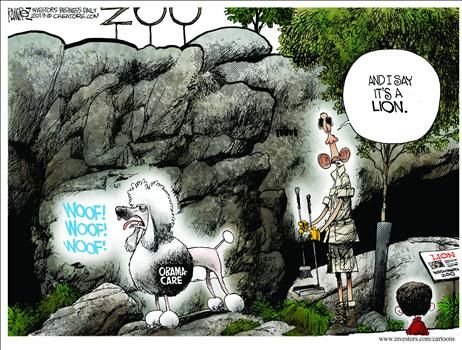
Bambi Meets Godzilla In The Middle East


Egypt Protsts Intensify As Army Deadline Approaches


By Walter Russell Mead

President Obama has had a rude awakening in the Middle East. The region he thought existed was an illusion built on American progressive assumptions about the way the world works. In the dream Middle East, democracy at least of a sort was just around the corner. Moderate Islamists would engage with the democratic process, and the experience would lead them to ever more moderate behavior. If America got itself on the “right side of history,” and supported this hopeful development, both America’s values and its interests would be served. Our relationships with the peoples of the Middle East would improve as they saw Washington supporting the emergence of democracy in the region, and Al Qaeda and the other violent groups would lose influence as moderate Islamist parties guided their countries to prosperity and democracy.

This vision, sadly, has turned out to be a mirage, and Washington is discovering that fact only after the administration followed the deceptive illusion out into the deep desert. The vultures are circling now as American policy crawls forlornly over the dunes; with both the New York Times and the Washington Post running “what went wrong” obituaries for the President’s efforts in Egypt, not even the MSM can avoid the harsh truth that President Obama’s Middle East policies have collapsed into an ugly and incoherent mess.

The President and his team have been taken in by two very old American mistakes about the rest of the world. One is to confuse the end of history with the morning news. The other is to exaggerate America’s importance to the rest of the world. The President is in good company here; most of our political and policy class is deeply steeped in these beguiling fantasies about how the world works, and most of his critics on both the left and the right are as deeply and fatally confused about the region as he and his advisors have been. I’ll get to the inveterate tendency of narcissistic American policy makers and commenters to exaggerate America’s influence in another essay; for now, it’s enough to look at how the deep set American tendency to think that democracy is sweeping the world, right now, has helped wreck the Obama administration’s Middle East policy.

The end of history, which AI founder Francis Fukuyama used to describe the historical implications of the Cold War, is to American political philosophy what the Second Coming is to Christians. In the end, almost all Americans devoutly believe, the liberal, market principles on which our country is built will triumph around the world. Asia, Africa, South America, the Middle East and even Russia will some day become democratic societies with market economies softened by welfare states and social safety nets. As a nation, we believe that democracy is both morally better and more practical than other forms of government, and that a regulated market economy offers the only long term path to national prosperity. As democracy and capitalism spread their wonder-working wings across the world, peace will descend on suffering humanity and history as we’ve known it will be at an end.

If these ideas are correct, and you can’t have a career in American public life unless you are willing at least to pretend that you believe them, then over time it is inevitable that these ideas will triumph worldwide. After all, if democratic capitalist countries grow faster and enjoy greater political stability and effectiveness than their opponents, sooner or later the opponents will fail to keep pace with the power of the democratic world and will either be crushed in war (as happened to Nazi Germany and Imperial Japan) or will drop, exhausted, out of the competition for power like the Soviet Union.

I actually subscribe to this article of our civic faith; I believe that democratic capitalism works better than the alternatives (though it does not work perfectly) and that other things being equal over time the societies who embrace these ideas will outperform those who do not.

But this does not mean that I believe that the world will become liberal and democratic tomorrow or that the path to this future will be a smooth and steady ascent. As a Christian, I believe in the Second Coming and the Last Judgment; that does not mean I have maxed out my credit cards in the belief that Jesus is returning tomorrow.

Unfortunately, much of our political and policy class, both on the left and the right, shares an unfounded confidence that liberal capitalism is going to triumph tomorrow. They are the secular, liberal counterparts of Christian fundamentalists waiting for the Rapture, a near-magical translation to a better world. This is what most American policy makers believed about Russia in the heady years after the Soviet collapse. President George W. Bush bet the ranch on the imminent democratization of the Middle East. So did President Obama.

This is not a new mistake. Thomas Jefferson was sure that the French Revolution heralded the dawn of democracy in 18th century Europe. Henry Clay thought the Latin American revolutions against Spain would create stable democracies across South America. Many Americans thought the 1848 revolutions in Europe would establish true freedom in the Old World. Many Americans thought that Sun Yat Sen’s revolution in China would establish democracy there back in 1911. Alexander Kerensky’s Russia was hailed as an ‘emerging democracy’ in 1917. Woodrow Wilson thought he could kill history with Fourteen Points and a League. It was a thought crime among liberal and progressive people to doubt that Africa would race ahead to democratic capitalism in the 1950s and 1960s as colonialism ended.

We are not always wrong. Germany, Japan and, in its own eccentric way, Italy all became liberal capitalist states after World War Two. Most of the Warsaw Pact countries signed up to the program in the 1990s. Much of East Asia has been moving in a liberal direction as its prosperity has grown. Mexico, Chile and Brazil, among other Latin states, are looking more like Henry Clay once hoped they would.

As a nation, we are not very good at figuring out when the end of history is going to dawn in particular countries, and because we are looking so hard for the triumph of democratic capitalism, we tend to assume that any sound we hear in the night must be its footsteps drawing nigh. Moreover, because we identify belief in our national principles as a moral quality, we are angry with those who seem to display an insufficient faith. When doubters questioned the Bush administration’s claims that the war in Iraq would begin a democratic transformation of the Middle East, they were called anti-Arab racists. When doubters questioned the Obama administration’s claims that moderate Islamists held the key to a democratic future for the region, they were called racists and Islamophobes. People who question whether Africa is on the brink of a mass breakout to democratic growth must also be expect to be called ugly names.

It seems misanthropic to doubt that a particular country isn’t on the road to freedom and prosperity, and it also seems like heresy against our national creed. That tendency is reinforced among our policy elite and chattering classes. The “experts” ought to know better and be more skeptical, but they are often more naive and more dogmatic than the American people at large. It is often the best educated and connected who are most confident, for example, that political science maxims work better than historical knowledge and reflection when it comes to analyzing events and predicting developments. When democratic peace theory or some other beautiful intellectual system (backed with regressions and statistically significant correlations in all their austere beauty) adds its weight to the national political religion, a reasonable faith can morph into blind zeal. Bad things often follow.

What Americans often miss is that while democratic liberal capitalism may be where humanity is heading, not everybody is going to get there tomorrow. This is not simply because some leaders selfishly seek their own power or because evil ideologies take root in unhappy lands. It is also because while liberal capitalist democracy may well be the best way to order human societies from an abstract point of view, not every human society is ready and able to walk that road now. Some aren’t ready because like Haiti they face such crippling problems that having a government, any government, that effectively enforces the law and provides basic services across the country is beyond their grasp. Some aren’t ready because religious or ethnic tensions would rip a particular country apart and cause civil war. Some aren’t ready because the gap between the values, social structures and culture of a particular society make various aspects of liberal capitalism either distasteful or impractical. In many places, the fact that liberal democratic capitalism is historically associated with western imperialism and arrogance has poisoned the well. People simply do not believe that this foreign system will work for them, and they blame many of the problems they face on the countries in Europe and North America who so loudly proclaim the superiority of a system that many people in the global South feel has victimized them.

As a result, there are many countries in the world where the dish Americans most want to eat just isn’t on the menu. This has certainly been true in Egypt, where a pluralistic, liberal society looks pretty effectively out of reach. Egypt’s liberals are too weak and too disconnected from the main currents of their society to govern, and neither the Islamists nor the army is particularly interested in building a liberal society. It was true in Yeltsin’s Russia, where liberal measures (carried out, as was inevitable under the circumstances, by people who were either incompetent or corrupt or both) led to national disintegration and ruin.

In such situations, American diplomacy is generally ineffective and often unites a whole country against us, frustrated by the mix of arrogance and cluelessness that we generally bring to such situations. We issue orders that cannot be fulfilled, judge people and movements by unrealistic standards, form strategic partnerships with individuals and groups who don’t understand their own country very well, set unobtainable goals and fail to grasp the most basic facts of political and social life. We do this over and over again; President Obama has followed a well worn trail into his current predicament.

Meanwhile the President’s most ardent critics, both on the right and the left, believe that his biggest problem is that he isn’t exhibiting sufficient faith in the national credo. Since we know that liberal democracy is triumphing everywhere, if it isn’t working in Egypt it must be the President’s fault. There must have been some policy path, there must still be some policy path, by which the President can bring Egypt into the Promised Land.

Americans need to face an unpleasant fact: while American values may be the answer long term to the Middle East’s problems, they are largely irrelevant to much that is happening there now. We are not going to stop terrorism, at least not in the short or middle term, by building prosperous democratic societies in the Middle East. We can’t fix Pakistan, we can’t fix Egypt, we can’t fix Iraq, we can’t fix Saudi Arabia and we can’t fix Syria. Not even the people who live in those countries can fix them at this point; what has gone wrong is so deeply rooted and so multifaceted that nothing anybody can do will turn them into good candidates for membership in the European Union anytime soon. If we could turn Pakistan into Denmark, the terrorists there would probably settle down—but that isn’t going to happen on any policy-relevant timetable. We must deal with terrorism (and our other interests in the region) in a world in which the basic conditions that breed terrorists aren’t going away.

This isn’t true of all Islamic countries, by the way. Turkey, Malaysia, Iran and Indonesia have their problems, but all of them have more and better choices than the countries going through such convulsions today. Poland and Yugoslavia went in different directions when communism fell; the Islamic world is no more monolithic than the old communist world.

There are, unfortunately, two things we can’t do in the Middle East. We can’t solve our problems and win the love and esteem of the folks who live there by promoting a transition to democracy that isn’t going to happen, and we can’t insulate ourselves from the region’s problems by walking away. Since those are the two alternatives most Americans instinctually prefer, our political and policy systems are going to be stressed. Moralists are going to hector presidents of both parties non-stop for their failures to impose Marquess of Queensbury rules on the various regimes and movements with which we will work, and isolationists are going to resist the commitments that a policy of messy engagement requires.

Winston Churchill famously said that Americans will do the right thing in the end—after they’ve exhausted all the alternatives. I doubt we’ve exhausted all the alternatives yet, and we will likely make more costly and ugly mistakes before we finally find our feet in the new world of the 21st century Middle East. We do, however, seem to be coming to the end of the first phase of failure: the blind belief that the rapid diffusion of democracy and capitalism will make all those nasty, dreary problems melt away.

Meanwhile, at least somebody is getting some benefit out of America’s miserable crawl through the desert. For Egypt’s generals, hungry to use every scrap of material to whomp up patriotic fervor for their cause, every sign of American displeasure, every jet not delivered and every lecture sternly read, is pure gold. The one thing everybody in Egypt agrees on now is that the Americans are about the most horrible people around—arrogant, stupid, judgmental, impractical, and not to be trusted when the going gets tough. The liberals, the generals, the Mubarak family, the Christians, the Islamists: on this one point they can all agree.

Making the coup look anti-American helps the generals make it look patriotic. They benefit from our critiques and our outrage: standing accused of having soldiers and agents whipping up crowds to attack American reporters, issuing sharp rebukes to mealy-mouthed American protests, ostentatiously leaving the clueless American diplomats twisting in the wind: this is balm to the Egyptian soul right now, and money in the bank for the new regime.


[People carry anti-Obama posters as thousands of Egyptian protesters celebrate in Tahrir Square as the deadline given by the military to Egyptian President Mohammed Morsi passes on July 3, 2013 in Cairo, Egypt. Photo courtesy of Getty Images.]


Obama Fanboy Asks 'What If Obama Has Lied To Us?'


What if the president lied to us?  

So many of President Obama's statements about NSA have been wrong. But he's too smart not to understand the truth


With the latest major revelation about National Security Agency surveillance, there’s a huge taboo question that needs to be put out on the table: Has President Obama been deliberately lying about the NSA, or have his statements just been repeatedly “wrong”?

After Barton Gellman’s blockbuster story today about the NSA breaking “privacy rules or overstepp(ing) its legal authority thousands of times each year,” the Washington Post published an attendant commentary with a headline declaring the president was merely “wrong” in last week suggesting that the NSA wasn’t “actually abusing” its legal authority. The implication is that when Obama made that comment — and then further insisted the surveillance programs “are not abused” — he may have been inaccurate, but he didn’t necessarily deliberately lie because he may not have known he was not telling the truth.

This is not to single out the Post commentary because, of course, such a rhetorical dance is fairly standard for the official political discourse these days. Since at least the Iraq War if not before, the media and political class typically goes out of its way to avoid declaring a lie a lie. Simply put, from “we know where (the WMDs) are” to Obama’s “actually abusing” declaration, seemingly deliberately inaccurate statements are rarely ever framed as outright lies. Even when such statements come from those with vested interests in hiding the truth, words and phrases like “misstated,” “wrong,” “least untruthful” and “misspoke” are trotted out.


 Fanboy. Sad. Idol Lied.  Boo-hoo.


These words and phrases now comprise a whole Washington vocabulary crafted specifically to avoid the L word. That’s because once the L word comes out, it means the official in question is deliberately misleading the public — and that is rightly considered an abhorrent act in a democracy.

But just as it is utterly absurd to claim Director of National Intelligence James Clapper didn’t lie before Congress (and some reporters thankfully admitted that truth in the open), it has now become almost silly to insinuate or assume that the president hasn’t also been lying. Why? Because if that’s true — if indeed he hasn’t been deliberately lying — then it means he has been dangerously, irresponsibly and negligently ignorant of not only the government he runs, but also of the news breaking around him.

Think about three recent presidential declarations. A few weeks back, the president appeared on CBS to claim that the secret FISA court is “transparent.” He then appeared on NBC to claim that “We don’t have a domestic spying program.” Then, as mentioned above, he held a press conference on Friday to suggest there was no evidence the NSA was “actually abusing” its power.

For these statements to just be inaccurate and not be deliberate, calculated lies it would mean that the president 1) made his declarative statement to CBS even though he didn’t know the FISA court was secret (despite knowing all about the FISA court six years ago); 2) made his declarative statement to NBC but somehow didn’t see any of the news coverage of the Snowden disclosures proving the existence of domestic spying and 3) made his sweeping “actually abusing” statement somehow not knowing that his own administration previously admitted the NSA had abused its power, and worse, made his statement without bothering to look at the NSA audit report that Gellman revealed today.

So sure, I guess it’s possible Obama has merely been “wrong” but has not been lying. But the implications of that would be just as bad — albeit in a different way — as if he were deliberately lying. It would mean that he is making sweeping and wildly inaccurate statements without bothering to find out if they are actually true. Worse, for him merely to be wrong but not deliberately lying, it would mean that he didn’t know the most basic facts about how his own administration runs. It would, in other words, mean he is so totally out of the loop on absolutely everything — even the public news cycle — that he has no idea what’s going on.

I, of course, don’t buy that at all. I don’t buy that a constitutional lawyer and legal scholar didn’t know that the FISA court is secret — aka the opposite of “transparent.” I don’t buy that he simply didn’t see any of the news showing that spying is happening in the United States. And I don’t buy that he didn’t know that there is evidence — both public and inside his own administration — of the NSA “actually abusing” its power.

I don’t buy any of that because, to say the least, it makes no sense. I just don’t buy that he’s so unaware of the world around him that he made such statements from a position of pure ignorance. On top of that, he has a motive. Yes, Obama has an obvious political interest in trying to hide as much of his administration’s potentially illegal behavior as possible, which means he has an incentive to calculatedly lie. For all of these reasons, it seems safe to suggest that when it comes to the NSA situation, the president seems to be lying. 

But hey, if Obama partisans and the Washington punditburo want to now forward the argument that the president has just been “wrong” or inaccurate or whatever other euphemism du jour avoids the L word, then fine: They should be asking why, by their own argument, the president is so completely unaware of what his government is doing. After all, if he’s not lying, then something is still very, very wrong.


David, I know that your are an Obama partisan - always have been, always will...


 But, the fact that you've main this much painful process, I'm willing to loan you a hankie.  On second thought, just keep it.


http://tinyurl.com/m8kyrdd


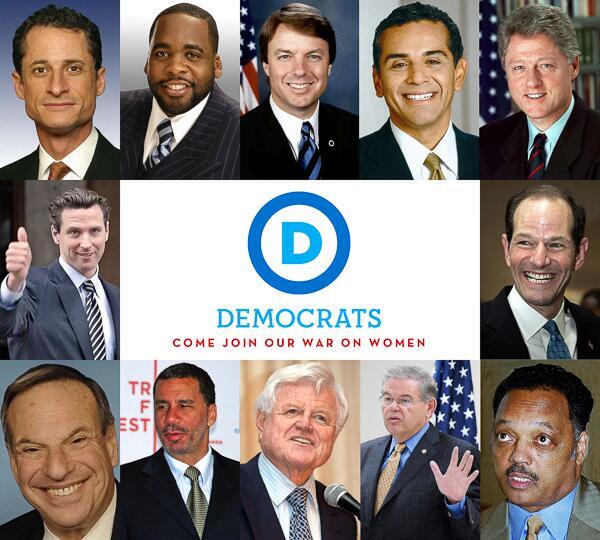
Pic of the Day: Dems: Come Join Our War On Women


Embedded image permalink


http://tinyurl.com/l8clgyp