Fund Your Utopia Without Me.™

12 August 2013

Of Rodeos, Clowns, & The Left's Selective Hysteria...


obama clown

Clown wearing Obama mask at Missouri State Fair rodeo


So, the Left is screaming 'Raaaaaaacist!' over the use of an Obama mask by a rodeo clown at the Missouri State Fair.  Maybe, they can explain why they were silent when the Philadelphia Inquirer ran this story...


"JA-LA-PE-NO!"

The big white bull with black spots and the foot-long horns came slamming out, looking big as a pickup truck, and Skimmer Walker, his feet spread, his hands out to the side, crouched to make a move.

Jalapeno dispatched his rider before the mandatory eight seconds. Now he stood tall, his head up, looking for something to charge.

T.J. Hawkins rolled out the big inner tube, and the bull lowered his head, shot forward and launched into the tube, sending it bounding down the center of the arena. The crowd cheered.  Then the bull saw the George Bush dummy.

He tore into it, sending the rubber mask flying halfway across the sand
as he turned toward the fence, sending cowboys scrambling up the fence rails, hooking one with his horn and tossing him off the fence.'

If they had any intellectual and moral honesty, they would have been up in arms last year when Bush's decapitated head was on a pike in HBO's 'Game of Thrones.'


Their selective outrage is just that, selective...and should be ignored for the partisanship that it clearly is.

Remember when all of this was cool?


https://securecdn.disqus.com/uploads/mediaembed/images/581/9385/original.jpg


http://blogs.travelweekly.co.uk/blogs/celebsonholiday/palin_sarah_effigy.jpg


War on Women???  Nah, Sarah Palin isn't a 'real' woman.


https://securecdn.disqus.com/uploads/mediaembed/images/581/8948/original.jpg


Flashback: Post-2004 burning of Bush in effigy in San Francisco:


http://www.zombietime.com/sf_rally_november_3_2004/143-4350_IMG.JPG


http://www.lookingattheleft.com/wp-content/uploads/2008/10/_mg_0206.jpg


Remember when the highest form of patriotism demanded the lynching of President Bush?


http://www.zombietime.com/zomblog/wp-content/images2009/hangbushringo.jpg


But, she's not a racist.  No-Sirree-Bob!


A still from the mockumentary 'Death of a President' depicting the assassination of George W Bush.  Here's a clip of the film's assassination scene:  YouTube.


Remember when the Left FREAKED out over the Obama the Joker, but shut up when it was disclosed that the artist was a Los Angeles-based Palestinian-American?

Remember when they said NOTHING about the t-shirt below...because they were wearing it?


And by all means, let's not forget Paul Krugman...


'A message to progressives: By all means, hang Senator Joe Lieberman in effigy.'

- Paul Krugman, Pass The Bill, The New York Times, 17 December  2009


Oh, and don't forget Krugman's 'Climate of Hate' Election Night 2008 party where Bush and others were burned in effigy...


Once Obama won the primary, Krugman supported him. Obviously, any Democrat was better than John McCain.


“I was nervous until they finally called it on Election Night,” Krugman says. “We had an Election Night party at our house, thirty or forty people.”


“The econ department, the finance department, the Woodrow Wilson school,” Wells says. “They were all very nervous, so they were grateful we were having the party, because they didn’t want to be alone. We had two or three TVs set up and we had a little portable outside fire pit and we let people throw in an effigy or whatever they wanted to get rid of for the past eight years.”


“One of our Italian colleagues threw in an effigy of Berlusconi.”


“I put out some coloring paper and markers so that people could write stuff on it and throw it into the fire. People really felt like there was stuff they wanted to shed! I had little hats and party whistles.”


So, shove your indignation up your ass.  Your race card is MAXED OUT.


http://tinyurl.com/kfh69gl

'Toons of the Day: You've Lost The Consent Of The Governed


Political Cartoons by Michael Ramirez

Political Cartoons by Gary Varvel

Political Cartoons by Lisa Benson

Political Cartoons by Ken Catalino

Political Cartoons by Michael Ramirez

Political Cartoons by Gary Varvel

Political Cartoons by Robert Ariail

Political Cartoons by Jerry Holbert


http://tinyurl.com/luylh2c


Once Hated Buildings That Became Icons (Photo Essay)


Eiffel Tower, Paris

The Eiffel Tower is beloved of today's Parisians, but the City of Light's residents weren't always so convinced of its charms. When work on the tower began, a group of important artistic types, including the novelist Guy de Maupassant, wrote a letter denouncing the "useless and monstrous" structure to the minister of public works, claiming its "hateful shadow" would overwhelm the capital's finer monuments. After opening, the tower proved to be a hit, but de Maupassant never warmed to it - supposedly, he liked to eat his meals in the restaurant at the tower's base, as it was the only place where he didn't have to look at it. 


Washington Monument, Washington DC
 

Built to commemorate America's first president, the Washington Monument was originally supposed to be surrounded by a circular temple-style colonnade. But when financial problems and conflict interrupted the monument's erection, it was decided to drop the colonnade. Many people protested that a simple obelisk was not grand enough: even its architect, Robert Mills, supposedly said the incomplete structure looked like a 'stalk of asparagus.'


 http://www.famous-places.com/wp-content/gallery/dancing-building-prague-czech-republic/dancing-house-in-prague-czech-republic.jpg


Dancing House, Prague

One of Prague's quirkiest buildings is the Dancing House, also known as "Fred and Ginger" because it looks a little like a pair of dancers. When it was built in the 1990s, it caused uproar because it contrasted so dramatically with the historic neigbhourhood surrounding it - one critic said it looked like " a crushed can of Coke" . These days, the building is more accepted, and is even featured on a gold 2,000 Czech koruna coin. 


http://media-cdn.tripadvisor.com/media/photo-s/02/62/9e/79/millenium-dome-at-dusk.jpg


The Millenium Dome, London 

Tony Blair was full of optimism when he declared that the Millenium Dome would be "a triumph of confidence over cynicism, boldness over blandness, excellence over mediocrity". But many members of the public were disappointed with this hugely expensive building and its exhibitions: Prince Charles described the structure as a "monstrous blancmange". Yet these days, the dome - now transformed into entertainment centre the 02 - is a London icon.


http://images.artnet.com/aoa_lot_images/84283/ezra-stoller-guggenheim-museum-photographs-silver-print-zoom.jpg


Solomon R. Guggenheim Museum, New York 

Frank Lloyd Wright’s modernist design for the Big Apple's Guggenheim museum received a barrage of criticism when it was first unveiled: critics compared the building unfavourably from everything to a toilet bowl to an upside-down washing machine. Today, it's considered one of the 20th century's most important buildings, and is as synonymous with New York as the Empire State Building.


http://3rdeyedrops.files.wordpress.com/2010/05/louvre-pyramid.jpg


Louvre Pyramid, Paris 

In 1985, French president François Mitterrand commissioned architect I. M. Pei to create a new entrance to the Louvre museum. The resulting glass pyramid caused a storm of controversy, as many believed the modern structure looked out of place at a building that has its roots in the 12th century. Today the pyramid is a Parisian landmark, and features in countless films and television programmes every year.


Sagrada Familia, Barcelona 

Still uncompleted nearly 90 years after its designer's death, Gaudi's eccentric and exuberant Sagrada Famila received harsh treatment in its early years of consutrction. Picasso declared "Send Gaudi and the Sagrada Familia to Hell" while later, George Orwell called it "one of the most hideous buildings in the world". Though the church is still not everyone's cup of tea, today its ambitious architecture is more widely appreciated. It receives over two million visitors a year.


 http://www.destination360.com/europe/uk/london/images/s/national-theatre.jpg


National Theatre, London 

It's hard to imagine London's South Bank without Brutalist icon the National Theatre, but many people would have once preferred it that way. Prince Charles famously declared that the concrete building seemed "a clever way of building a nuclear power station in the middle of London without anyone objecting", and there were plenty who agreed with him. John Betjeman, however, was an early admirer. He wrote to its architect in 1976 that he "gasped with delight at the cube of your theatre in the pale blue sky and a glimpse of St. Paul’s to the south of it. It is a lovely work and so good from so many angles… it has that inevitable and finished look that great work does". The theatre is now Grade II* listed.


Portland Building, Portland, Oregon 

Few office blocks have stirred as much controversy as this gaudy building, created in 1982 by the architect Michael Graves. The postmodernist design, a significant contrast to most other buildings in the city, was initially loathed by residents, but it is now on the National Register of Historic Places. Architecture critic Paul Golberger says of it: 'For better or for worse, the Portland Building overshadows other things.... it had a profound effect on American architecture and brought a return to classicism that brought us better buildings.'


http://tinyurl.com/mu5l9rm


11 August 2013

1979: The Year That Heralded The 21st Century


In 1979 in the Western calendar was 1400 in the Muslim one. This was exploited by The Ayatollah Khomeini.


In the year 1979, a great many lies were exposed.


By Charles Moore

Certain years make a difference: not for nothing is our most famous comic account of British history called 1066 and All That. Obvious more recent candidates for such pivotal roles, on a global scale, include 1789, 1917 and 1945.

Christian Caryl’s book states the claim of 1979 to join this gallery. It was the first year that heralded the 21st century, he argues. Partly, perhaps, because I was young then (“Bliss was it in that dawn to be alive, but to be young was very heaven!”), I agree with him. The author’s method is to intertwine five stories of that year – the Iranian revolution, Deng Xiaoping’s economic reforms in China, the Soviet invasion of Afghanistan, John Paul II’s first visit to Poland as Pope and Margaret Thatcher’s first general election victory.

Occasionally, the links are strained. It can be almost hilarious to switch from, say, an account of the Soviets murdering people in the presidential palace in Kabul to Jim Callaghan’s difficulties with the prices and incomes policy. Not everything can be made to fit.

But I think Caryl captures something important. One way that I judge this is by the fact that I can vividly recall precise moments of the ''Where were you when…?’’ sort in all the main stories that he describes (except for the Chinese one, the least event-specific of the five). I remember, for instance, sitting in my college library, staring at the grim features of the Ayatollah Khomeini on the cover of The Economist, and suddenly realising that something was happening for which the secular West (including that mighty magazine itself) was almost completely unprepared.

Similarly, in my last year at university, I got into the bath, turned on the radio, and heard that a Pole with a name that no one could pronounce had become Pope. It was immediately obvious that the history of divided Europe was about to change.

When, a few months later, John Paul II set off to visit his native country, I hired a television to see it covered. As Caryl well relates, the visual images were poor, because the Communist state media controlled them. The cameras tried to avoid the enormous crowds, but it was impossible to conceal the fact that 11 million people turned out to see the Pope in person that week. In Victory Square in Warsaw – a place which, since it had been so renamed by the Communists in 1946, had never seen a Cross – John Paul explained that Christ “cannot be kept out of the history of man in any part of the globe”.

It is not fanciful to trace from that visit, as Caryl does, the course of the end of Communism – through the Solidarity trade union in Poland, via the rise of Gorbachev, to the fact that the Berlin Wall came down without violence.

And it is fascinating to compare this with the power of religion in a very different guise. This book tells us how the Ayatollah Khomeini managed to adopt Communist revolutionary methods and wrap them in the turban of Islam. Just as John Paul’s sincere desire for peace spread through the Christian world, so did the Ayatollah’s longing for violence through its Muslim counterpart. The author points out that the year 1979 in the Western calendar was 1400 in the Muslim one. This was exploited by Khomeini supporters to make him seem almost apocalyptic. They hinted that he was the hidden Imam of Shi’ite belief. Revolution had become religious and religion had become revolutionary.

Though dressed in medieval garb, this was actually a modern phenomenon. Khomeini enlisted the Prophet to control the proletariat in best Bolshevik style. His political theory of the “guardianship of the jurist” was just like Lenin’s “leading role of the party”: it gave him supreme power.

Why were these disparate events of 1979 so striking? Because they struck at the particular notion of “progress” with which we in the West had been brought up. The idea – expressed in the then-popular phrase “the mixed economy” and in the love of détente with the Soviet Union – was that socialism was basically good, and had won a permanent moral victory, but that capitalism was a grubby but necessary mechanism for producing the money socialism required. By the Seventies, this “progress” of humanity was visibly faltering. Inflation, labour unrest, social breakdown and growing terrorism and extremism saw to that.

So if you felt discontented with the progress dogma, you were alert to those who questioned it. Mrs Thatcher, for example, is best known for her economic doctrines, but Christian Caryl is right to see that her global effect (he writes well, for instance, about her legacy in modern India) was not technical, but human. She was preaching about what people can do if only the state will let them.

For all his continuing political repression, Deng Xiaoping came to understand this truth. In 1979, the Chinese city of Shenzhen did not exist. By 2005, it provided the fourth busiest port in the world. On the 69th floor of one of its skyscrapers, says Caryl, the local museum tells its story. Waxwork figures of Deng and Mrs Thatcher are depicted drinking tea with Beijing and Hong Kong in the background, like tutelary deities.

Caryl has a nice story about Deng’s visit to America in January 1979. At dinner in the White House, the Left-wing actress Shirley MacLaine gushed about her trip to a rural collective in Mao’s China. A professor there had told her how much happier he was now that he had been forced to go and live among the people. ''Deng looked at her scornfully and said: 'He was lying.’” In the year 1979, a great many lies were exposed. 


http://tinyurl.com/klenegs


It's Good To Be The King And His Dog


Bo, the US First Family's waterdog, gets off the Marine helicopter at Martha's Vineyard


Rooms have to be found for dozens of Secret Service agents, someone has to carry a selection of presidential basketballs, and of course the family dog needs his own state-of-the-art aircraft.

Arriving in the idyllic coastal retreat of Martha's Vineyard in Massachusetts, Mr Obama left behind him in Washington DC high profile debates over the budget, government surveillance and his health care reforms. Instead, he will spend the next eight days playing golf, going to the beach, and buying books from the Bunch of Grapes bookstore.

In the air he swapped his suit and tie for khakis and a blue shirt with rolled-up sleeves, while Mrs Obama wore a yellow-and-white summer dress.

Bo, the president's Portuguese Water Dog, arrived separately on one of two MV-22 Ospreys, a hybrid aircraft which takes off like a helicopter but flies like a plane.

It was the first time the Ospreys have been taken on holiday by a US president.

More than 70 hotel rooms, each costing up to $345 (£220) a night, have been booked out for Secret Service agents, who took charge of luggage including two large mesh bags full of basketballs.

The Obamas are staying in Chilmark on the western tip of the island, an area that is dotted with multi-million dollar homes. The neighbours include actor Ted Danson and the singer Carly Simon.

On several previous visits the Obamas had stayed at the 28-acre Blue Heron Farm, but it has since been sold to Britain's most celebrated architect, Baron Foster of Thames Bank.

The president has therefore had to downsize to a $7.6 million, 5,000-square foot retreat on nine acres which is owned by a businessman friend from Chicago. It includes a basketball court.

As a result Mr Obama will be staying closer to public roads which will have to be closed as his motorcade heads for the golf course of bookshop.

The Martha's Vineyard Times newspaper warned residents to expect "extraordinary and lengthy up-island detours". Local officials also emailed residents, saying: "Anyone aggrieved by this closing should email or call the White House."

Jay Carney, White House spokesman, said: "Obviously, when you're President of the United States, you carry a little baggage when you travel. And that's true whether it's on a summit, international meeting, a domestic trip, or for a vacation. I know he's looking forward very much to some down time with his family. I'm sure he'll see some friends."


http://tinyurl.com/l7nkfjv 


Deep In The Heart Of Texas...In The 1970s (Photo Essay)


Lone Star: A young girl in bunches and a cowboy hat looks pensive in a series which captures the Seventies in Texas


Lone Star: A young girl in bunches and a cowboy hat looks pensive in a series which captures the Seventies in Texas


By Daily Mail Reporter 

It's said that everything's bigger in Texas and it appears from these photographs that the state took to the Seventies love of living larger than life better than anyone else.

The soft-focus color shots show the decade in the Lone Star State with a sense of sepia-tinged nostalgia. 

The images capture the weather-beaten faces of ranch hands, trappers with their pelts of raccoon and bobcat, and young hippies frolicking in the sunshine smoking pot.


Tradition: A young boy joins two sheep shearers as they round-up the animals headed for the slaughterhouse near San Antonio

Tradition: A young boy joins two sheep shearers as they round-up the animals headed for the slaughterhouse near San Antonio


Puffing away: Two young women share a joint during a day out at a lake in Leakey, Texas

Puffing away: Two young women share a joint during a day out at a lake in Leakey, Texas


Not for the squeamish: Pelts of raccoons, fox and bobcat are prepared for market

Not for the squeamish: Pelts of raccoons, fox and bobcat are prepared for market


Trappings of Texas: One of the oldest trappers in the town of Leakey shows off a skinned possum to a young boy

Trappings of Texas: One of the oldest trappers in the town of Leakey shows off a skinned possum to a young boy


Big game: The first deer of the hunting season is tied to the top of the couple's station wagon

Big game: The first deer of the hunting season is tied to the top of the couple's station wagon


Getting into the Seventies spirit: Girls enjoy a smoke near the lake

Getting into the Seventies spirit: Girls enjoy a smoke near the lake


The images come from the National Archives and are part of an exhibition entitled 'Searching for the Seventies: The DOCUMERICA Photography Project'.

The exhibition is on at the Lawrence F. O’Brien Gallery of the National Archives Building in Washington DC until September 8. 

The photography project DOCUMERICA was established by the Environmental Protection Agency and captured American life from 1971-1977. 

The series which documents throughout the Seventies, covers worrying environmental issues, questionable fashion sense and cultural mores.


On the road: A local character named Woodrow Wilson hangs out in his truck by the local river

On the road: A local character named Woodrow Wilson hangs out in his truck by the local river


Polluted: Smoke from the burning of old auto batteries in April 1972

Polluted: Smoke from the burning of old auto batteries in April 1972


Fun and games: Youngsters playing tether ball at a school near San Antonio

Fun and games: Youngsters playing tether ball at a school near San Antonio


Grabbing a slice: The pizza place in the town of Leakey, pictured in 1973

Grabbing a slice: The pizza place in the town of Leakey, pictured in 1973


Lone Ranger: A ranch hand poses for the camera in 1973 near San Antonio

Lone Ranger: A ranch hand poses for the camera in 1973 near San Antonio


Groovy lifestyle: A woman hangs out in her camper van at the Garner State Park in 1972

Groovy lifestyle: A woman hangs out in her camper van at the Garner State Park in 1972


Time for tea: Hunters playing poker while waiting for wild deer in 1972

Time for tea: Hunters playing poker while waiting for wild deer in 1972


Photo Essay Links


http://tinyurl.com/m5las4e

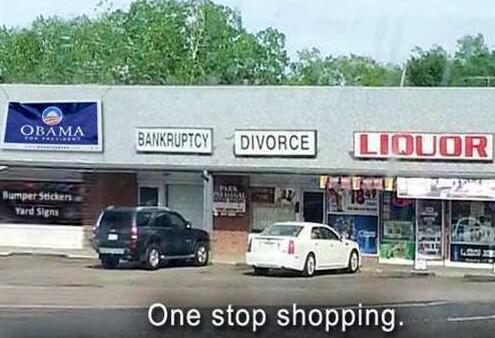
Pic of the Day: One-Stop Shopping in the Age of Obama


(h/t James Woods)


http://tinyurl.com/ma67fby